Camping Cots: Structural Mechanics, Tent Geometry, and Sleep System Selection
An analytical guide to camping cot mechanics, frame tension, thermal dynamics, and evaluating marketplace specifications for tent sleeping.
In this assessment
Purchases through affiliate links may earn The Night Shift commission at no extra cost to the reader. View our affiliate funding policy
A camping cot resolves one fundamental outdoor sleep problem: direct contact with uneven, rock-strewn, or damp ground. By suspending a fabric deck between longitudinal side rails supported by tensioned cross-legs, a cot eliminates ground pressure points and makes entering and exiting a sleeping bag substantially easier. However, introducing a cot into your sleep setup alters tent volume, total pack weight, and thermal dynamics in ways that require careful calculation before purchasing.
Elevating your body eliminates conductive heat loss into cold dirt or frozen turf, but it exposes the underside of your cot to ambient air circulation. Because taut fabric provides virtually zero insulation, cold air moving underneath pulls body heat away via convection. In temperatures below 55°F (13°C), a cot alone is rarely warm enough; pairing the cot deck with an insulated sleeping pad or foam underlayer is essential to block airflow.
Core Engineering Factors in Cot Design
Most portable camping cots fall into two mechanical formats: compact backpacking/low-profile cots and full-height car camping frames. Choosing between them requires assessing three main structural variables:
1. Usable Deck Width vs. Frame Width
Manufacturers frequently list exterior dimensions rather than the usable fabric width between the poles. The rigid side rails can sit directly beneath your shoulders or upper arms if a cot is too narrow. A standard 60–65 cm (approx. 24–26 in) width functions adequately for back sleepers with narrow shoulders, but active side sleepers and broader individuals often find their elbows resting on aluminum tubing unless they step up to a 70–80 cm wide deck.
2. Lever Tensioning and Leg Assemblies
Ultralight and compact cots rely on bowed cross-legs or mechanical locking levers to pull the fabric drum-tight. Tension is critical: inadequate fabric tension results in a hammock-like sag that bends your spine, while overly stiff manual spring bows can be frustrating to assemble inside a cramped tent. Lever-lock clamp mechanisms simplify setup by using mechanical leverage to snap cross-members into place, though they introduce moving joints that require careful alignment.
3. Tent Clearance and Headroom
Low-profile cots typically provide 12–18 cm (5–7 in) of clearance off the tent floor. This low height leaves sufficient overhead space in compact two-person or three-person dome tents with sloped walls. High-profile cots (35–45 cm clearance) allow convenient under-bed gear storage and chair-like seating height, but they push your head into the ceiling slopes of standard backpacking shelters, restricting their use mainly to tall cabin tents or canvas outfitter shelters.
Evaluating Marketplace Cot Options
When shopping online, listing titles often bundle contradictory terms like "ultralight" and "heavy duty" onto the same item. Comparing the stated dimensions, fabric grades, and frame materials against your specific shelter constraints helps separate practical sleep solutions from mismatched gear.
Oversized Deck Platform for Taller Campers
Campers who find standard 190 cm lengths and 65 cm widths restrictive need dedicated oversized dimensions. The listing below from Sonuto Tent Store specifies an extended 210 × 80 cm footprint with 600D Oxford fabric, offering broader surface area at an advertised 4 kg total weight.
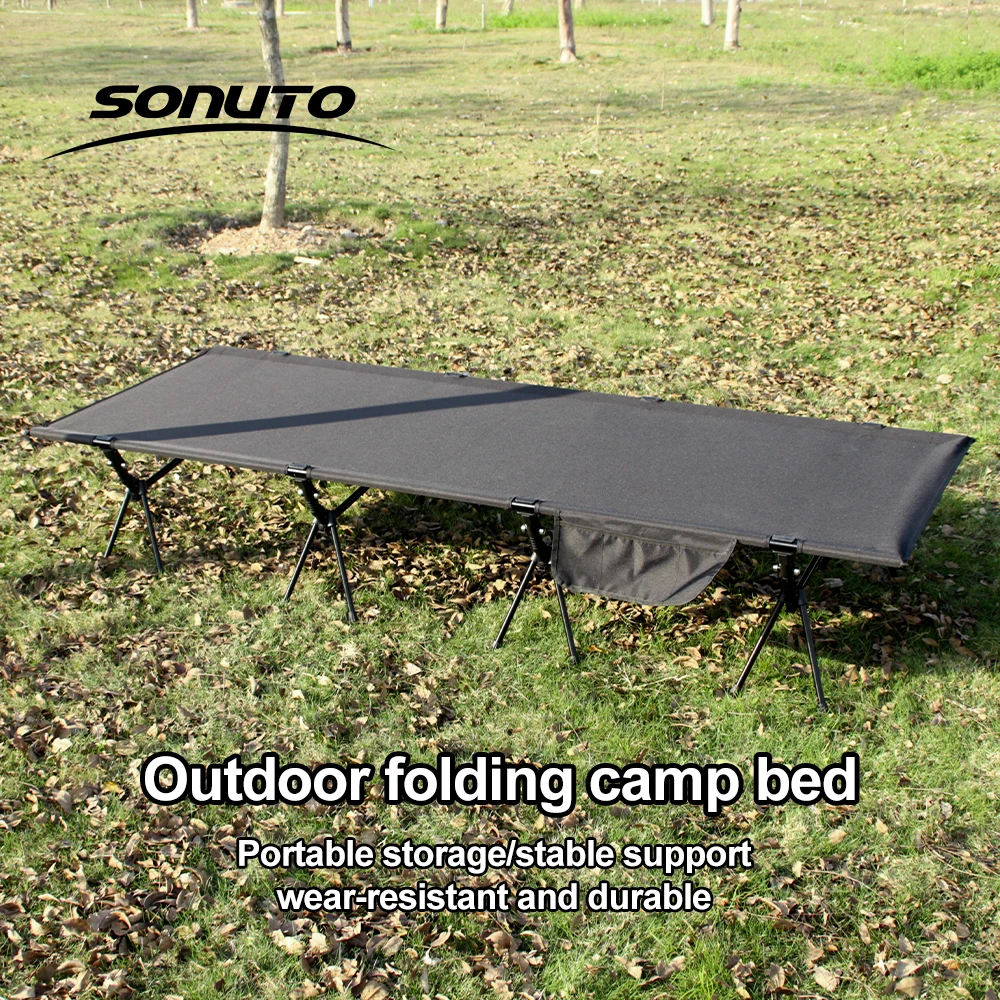
An 80 cm deck width provides significant elbow room, but buyers must verify whether their tent floor accommodates a 210 cm length without forcing the cot's corners against sloped tent walls, which can transfer condensation directly onto your sleeping bag.
Ultralight Aluminum Lever Systems
For modular portability across hiking and vehicle camping trips, aluminum alloy frames with removable leg extensions allow switchable high/low configurations. The WEST TUNE Choice Store listing advertises an aluminum alloy folding frame with modular leg struts.
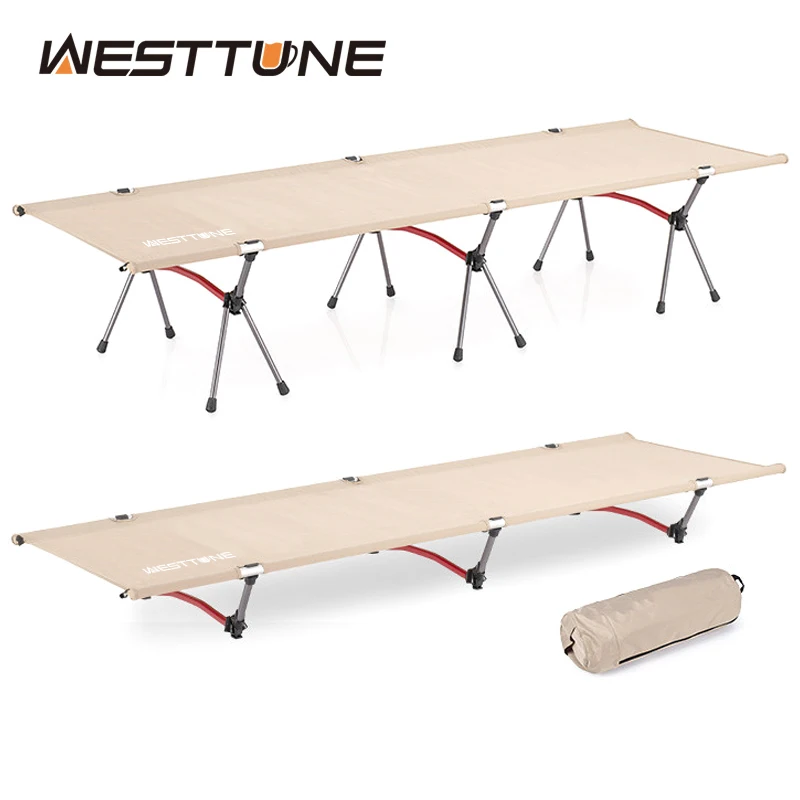
Before purchasing, confirm whether the listed option includes both low-profile foot clips and full-height leg extensions, as multi-variant listings frequently show high-rise extensions in photos while selling the base frame separately.
Compact Low-Profile Tent Beds
When vertical tent volume is tight, low-profile cots with multi-leg distribution spread weight evenly across the tent floor without pressing your face into sloping mesh. The LIFEWITHCAMP Outdoor Store offering focuses on a low-clearance folding structure designed for compact tent floors.
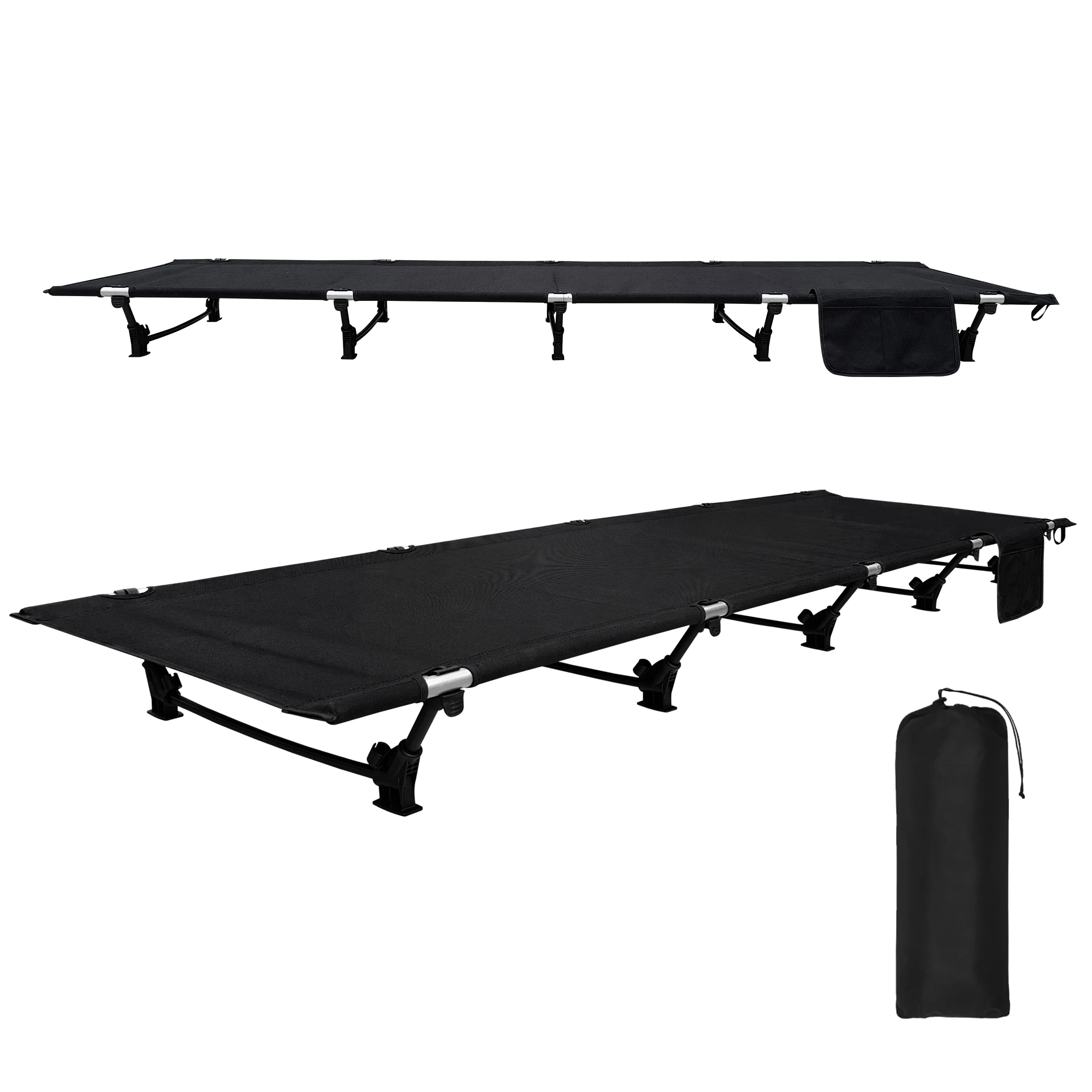
Low-slung cross-bars sit only a few inches above the floor. Ensure that the fabric remains taut under your body weight so your midsection does not bottom out against the ground when sitting upright.
Wide-Profile Compact Cot Formats
Standard compact cots often measure 65 cm wide. The listing by Stone's Store highlights a 70 cm wide platform with graphics referencing 7075 aluminum alloy construction and a 150 kg / 330 lb stated load limit.
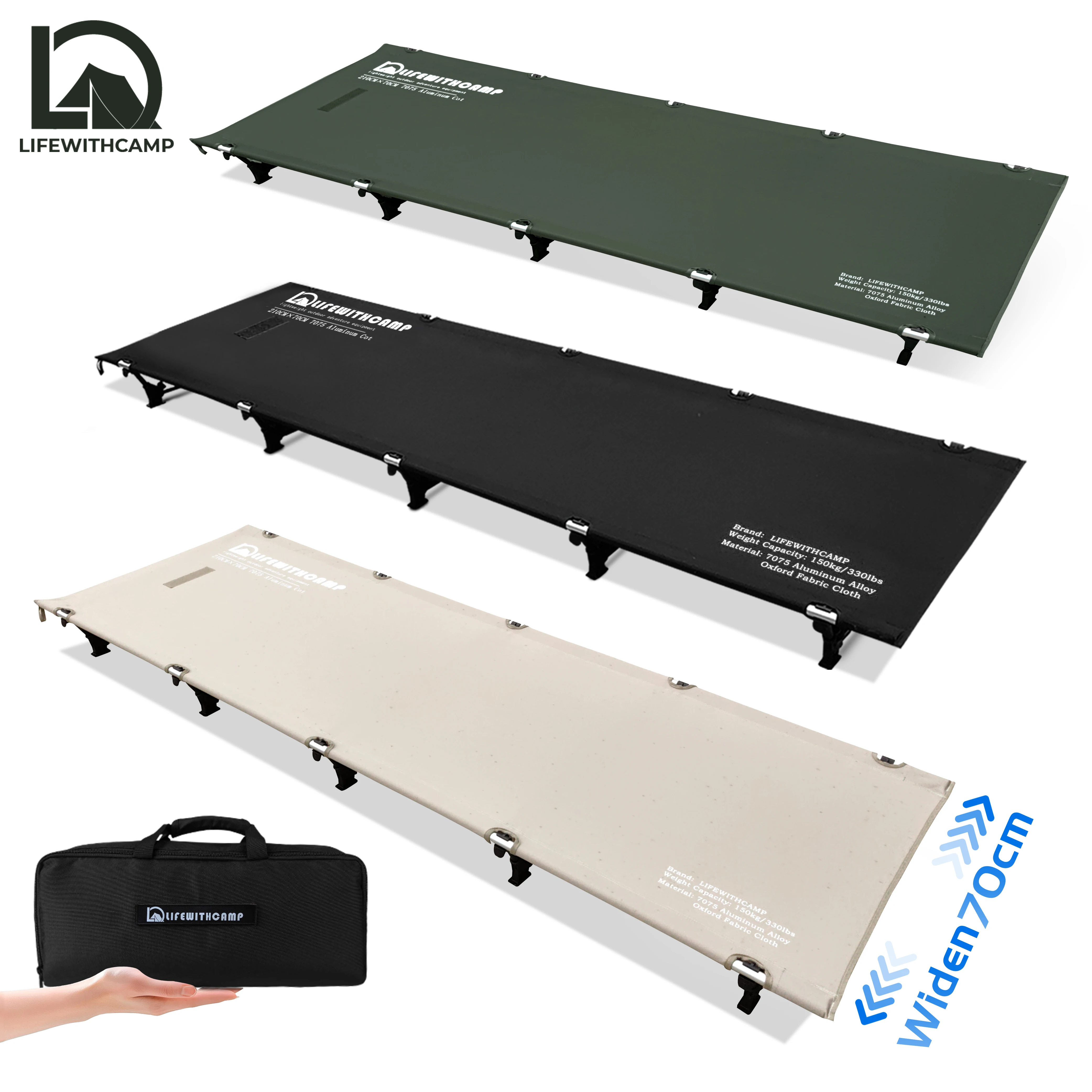
The extra 5 cm of fabric width reduces arm contact with side rails, making it a viable compromise between packing size and sleep comfort for side sleepers.
Cot Selection Matrix
| Listing / Option | Stated Dimensions / Material | Advertised Weight | Primary Fit |
|---|---|---|---|
| Sonuto 210×80cm Cot | 210 × 80 cm / 600D Oxford | 4 kg (Stated) | Tall campers, spacious family/cabin tents |
| WESTTUNE Aluminum Cot | Aluminum alloy frame | Not verified | Budget-conscious modular travel setups |
| LIFEWITHCAMP Compact Cot | Compact folding tent bed | Not verified | Standard low-clearance dome tents |
| Stone's Store 70cm Cot | 70 cm wide / 7075 Aluminum (Image claim) | Not verified | Side sleepers needing modest extra shoulder width |
Pre-Purchase Checklist for Cot Buyers
Before placing an order on an open marketplace, run through these verification points with the seller:
- Leg Point Geometry: Ensure the feet feature wide, rounded caps or flat spreader bars. Narrow or sharp-edged metal feet will puncture lightweight tent floor fabrics under point pressure. Always pair cots with protective floor savers or EVA foam tiles inside your tent.
- Package Inclusions: Confirm whether the listing price includes carry bags, extension legs, side organizers, or replacement locking brackets. Marketplace images often show fully expanded variants with multiple accessories that may not ship in entry-level packages.
- Weight Capacity Rating: Differentiate between static load limits and dynamic movement. A cot rated for 120 kg may hold steady under a static sleeper but can flex excessively if you drop your full weight onto it when sitting down. Follow the exact manufacturer instructions for assembly sequence to prevent bent frame poles.
For additional details on balancing ground clearance against weight and thermal management across various trip formats, consult Onwak's analysis of camping cot styles versus sleeping pads.